16 amazing things to do in Athens
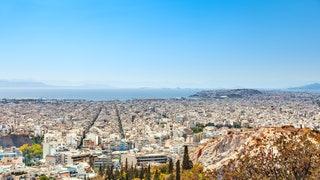
Unearth the time-stained beauty of one of humanity's most ancient habitats, Athens. The city, once teetering on the brink of financial crisis, manages to stir up excitement as a hip hotspot in the south of Europe. Athens is reverberating with a culinary vibrancy that has captivated the hearts of short-term travelers who are checking in at its newly established, yet extraordinary hotels. A new workforce of artists and designers call the city their home, attracted by plausible rents, abundant sunlight, and the city’s unique disregard for traditional norms.
But don’t expect the typical order in Athens, as this city thrives in its own chaotic symphony: bustling traffic, unpredictable interactions, a diverse architectural landscape that blends Byzantine, Bauhaus, neoclassical, and pedestrian style. Overseeing the city's thrilling disorder is the ever-present witness of historical glory, the Parthenon. It remains an eternal part of the Athenian landscape, its relevance unavoidable for any visitor in Athens. But for the locals, these ancient artifacts woven within the dense urban fabric have become somewhat of an overlooked detail. The real energy of Athens is found in the graffiti-adorned alleyways, squares adorned with lively cafes, abandoned factories transformed into art galleries, tucked-away bars couched in arcades, and hidden bays perfect for an offbeat swimming experience – places where the heart of Athens pulsates with an unstoppable rhythm.
While ancient structures continue to steal the limelight, it is the unexplored, unique experiences that truly present the best that Athens has to offer.
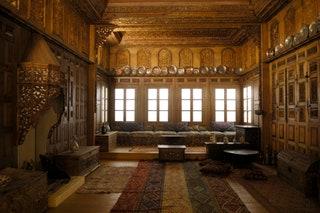
1. Browse the Benaki Museums
Athens has a surfeit of great museums. If you only have time for one, make it the Benaki Museum of Greek Culture. Housed in a neoclassical-style mansion, the collection covers everything from prehistoric busts and ancient amulets to Byzantine icons, traditional folk costumes, and 19th century engravings. This is where the fashion set come for inspiration, and coiffed ladies meet for coffee on the roof terrace. The Benaki museum has six other venues, specialising in everything from Islamic art to embroidery. Don’t miss The Ghika Gallery, a rich retrospective of 20th century Greek art in the former atelier of modernist artist Nikos Hadjikyriakos-Ghika. And check out the temporary architecture, fashion, and photography exhibitions at Pireos 138, a purpose-built space with a brilliant gift shop dedicated to contemporary Greek design. Opt for a combined ticket, valid for all seven sites for three months, if you plan to museum-hop.
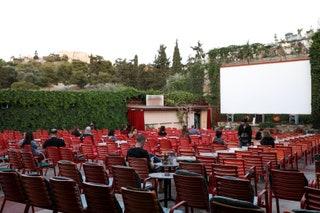
Experience Paradiso Cinematic Magic at Athens
Unforgettable cinematic experiences await you in Athens, a city where film enthusiasts find their sanctuary. Trade traditional theater viewings of the latest hits for artful and eclectic cinema in vintage-inspired theatres. Bask in the shimmer of moonlight while watching a film, an experience that ranks amongst the top summer activities in this vibrant city. Athens hosts upwards of 60 open-air theatres that find homes in unexpected places like parks, rooftops, even vacant spaces flanked by residential areas.
The Roman aqueduct possibly offers the most unique theater, housing Cine Dexameni right above it and is located adjacent to a quaint, old-world ouzeri. For those seeking a taste of nostalgia, Zefyros (at Troon 36, Petralona) offers an enchanting selection of golden-age classics to its arty associates. Cine Oasis (at Pratinou 7, Pangrati), set amidst the greenery of a flourish garden in Pangrati, a district frequented by creative minds from films, offers another sensory delight.
Since 1935, Cine Thisio has been a cherished venue amongst film lovers and is strategically located just beneath the Acropolis, offering an unbeaten panorama. Viewers not only get to enjoy the mesmerizing sight of the Parthenon but are also treated to a gourmet serving of delicacies like handcrafted cheese pies and tangy sour cherry cordials.
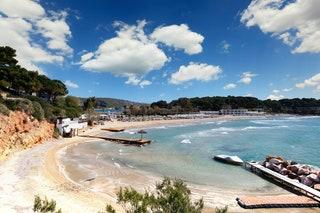
3. Hit the beach
The Athens Riviera stretches 35 miles from Paleo Faliro to the resplendent temple of Poseidon at cape Sounion. To locals, these coastal communities are simply known as ‘Nou-Pou’, short for notia proastia, or southern suburbs — a succession of waterfront boardwalks, marinas and urban beaches that gradually gives way to sleepy seaside resorts and rocky coves like Limanakia, where tanned teens leap from the rocks. High rollers have seasonal passes to Astir beach in Vouliagmeni, where the remains of an ancient temple are surrounded by sunbeds and boutiques. When the south winds roll in, surfers ride the waves at nearby Kavouri and Vouliagmeni (check out Kyma surf school, if you’re a novice). A young, hip crowd strip off at Krabo, while families gravitate to Zen beach. If you prefer your beaches without sunbeds, head to Legrena or KAPE, close to Sounion (you’ll need your own wheels). The balmy climate means you can swim comfortably for six months of the year. A warmer alternative for winter swimmers: the healing waters of Lake Vouliagmeni, fed by thermal springs that keep the temperature a steady 22-29 degrees.
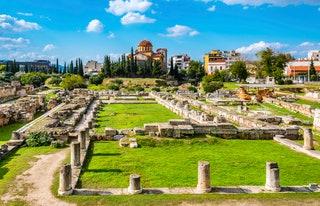
4. Explore Athenian attitudes to the afterlife
Of all the archaeological sites that circle the Acropolis, the most moving (yet often overlooked) is the ancient cemetery of Kerameikos. Named after the potters’ workshops that flourished here in antiquity, the site is built on what were once the banks of the Eridanos river. In the 11-acre necropolis, you can wander among monumental tombstones, haunting epitaphs, and sections of the Themistoclean walls built in the 5th century BC. The on-site Oberlander museum is a trove of funerary treasures, from painted urns to perfume bottles. It’s intriguing to decipher what the carved marble gravestones signified about the status of the deceased. By contrast, the ornate tombs in the First Cemetery of Athens tell a less ambiguous story about class and culture. This is where the great and good of Athens are laid to rest among the bitter-orange and cypress trees. You might come across Melina Mercouri or George Seferis, asleep alongside the resident cats.
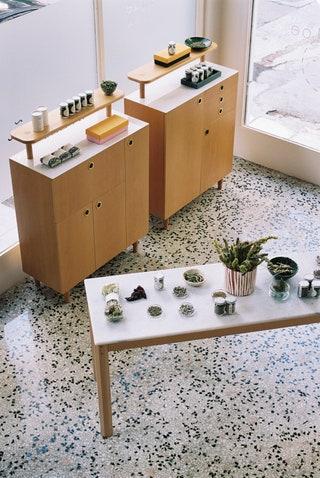
5. Customise your cosmetics at Naxos Apothecary
Pharmacist George Korres, founder of Korres cosmetics, created his first herbal remedies for friends while working in Greece’s oldest homeopathic pharmacy. The Naxos Apothecary pays tribute to his roots on the island of Naxos. Exceptionally effective and exquisitely packaged face and body products are named after Naxian villages. Candles and fragrances seduce with the summery scents of prickly pear, fig, cedar and sea salt. At the flagship store, you can watch phytotherapists at work in the open lab or book a skin analysis and personalise your skincare. Upstairs, the tranquil tearoom serves divine tisanes and cocktails exclusively made with Greek herbs and spirits, all of which are for sale. (They also do a power breakfast of yoghurt, honey, bee pollen, nuts and fruit.) Daphnis & Chloe, a niche brand that specialises in sustainably sourced herbs and seasonings from all over Greece, is another excellent source of easily transportable gifts. Their smoked chilli flakes and wild thyme flowers have a cult following. Visits to the showroom in up-and-coming Neos Kosmos are by appointment.

6. Bookmark these shops
Are bookshops the new coffee shops? In Athens, they are often both. On a charming square in Petralona, Adad is the petite new HQ of curator Alix Janta’s independent art publishing house. Leaf through monographs, catalogues, and limited-edition sketchbooks with a glass of wine on hand-carved Cretan chairs. (And ask what’s on at Alkinois, Janta’s exciting gallery and project space nearby.) Aiora Press specialises in modern Greek classics in translation. Pick up definitive translations of Elytis and Cavafy at their bookstore in Exarchia. O Meteoritis, in the heart of scruffily hip Kypseli, hosts screenings and talks among piles of second-hand books. Zatopek is a peaceful spot to bring your laptop, or to enjoy an evening spritz and salad on a pedestrian street. Run by a fashion editor and graphic designer, Hyper Hypo is very zeitgeisty, from the Yves Klein blue walls to the queer art books. Lexikopoleio in Pangrati has enthusiastic staff and an exhaustive selection of books about Greece. Browse your purchases at Aerostato café around the corner, a mellow local hangout.

7. Modern cultural icons
After several false starts, the National Museum of Contemporary Art has hit its stride since Katerina Gregos was appointed artistic director in 2021. The donation of 140 large-scale installations from the D. Daskalopoulos Collection in 2022 injected some serious cachet to the museum’s permanent collection. A converted brewery, EMST occupies an entire block on Syngrou Avenue, which connects the city centre to the seaside. Among the strip clubs and business hotels are two more 21st century landmarks: Onassis Stegi, with a game-changing line-up of performances, talks, festivals, block parties, and pop-up events all over town. Stegi even has its own brilliantly diverse radio station, Movement Radio. At the seaside end of Syngrou, Renzo Piano’s Stavros Niarchos Foundation Cultural Centre is a masterclass in sustainable design. A drought-resistant park and seawater canal surround the Greek National Opera and Library, slotted into a man-made hill that doubles as a green roof. A glass elevator glides up to The Lighthouse, an observatory with a floating solar canopy that powers the complex. Skip the in-house eateries and head around the corner to Pezoulas taverna instead; it serves some of the freshest seafood in Athens.
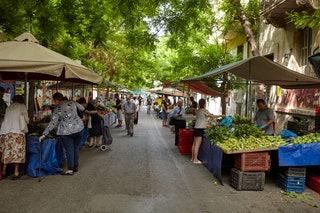
8. Revel in the Delights of Local Shopping
Each Athenian neighbourhood takes great pride in its own weekly farmers market, or as locals fondly call it, laiki. Operating every week from sunrise to roughly 3 in the afternoon, these markets transform entire streets into vibrant hubs of seasonal produce. Stalls brimming with the season's rich harvest—a kaleidoscope of beetroot, chestnuts, and pomegranates one month, transitioning to sunflowers, cherries, and tomatoes as the seasons shift. At the laiki, visitors have the special opportunity to select their preferred fruits and vegetables directly from the stall, as well as stocking up on unique local specialties such as olives, honey, and various aromatic herbs for their pantry at home.
The enjoyment of shopping at the laiki is not limited to procuring goods. It's also a social event filled with color, laughter and music. Buskers often come by to amuse the crowd of buyers; their lively melodies embellishing the chatter of haggling shoppers and vendors. Vendors themselves are renowned for their humorous sales pitches and exaggerated claims about the benefits of their products; claims like “Half a watermelon a day, keeps mystery ailments at bay!" or "Caution! Our tomatoes don't sound a warning honk if squeezed!” The most popular and well-stocked farmers markets can be found in Exarchia and Neos Kosmos on Saturdays, with Pangrati and Koukaki markets stirring the local community to life every Friday.
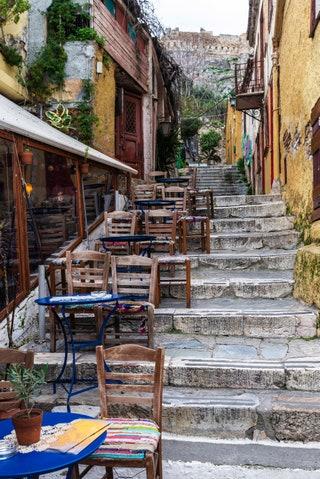
9. Hit the bottle
The days when Greek wine meant cheap retsina served in a tin jug and priced by the kilo are long gone. Greek wines are winning global accolades, but most wineries have low yields which means you won’t find them in your local off-licence. Try them at Wine is Fine, a hip Gallo-Greek wine-bar-cum-bistro on a pedestrian street better known for selling doorhandles. At Materia Prima, which has two easy-going outlets in Koukaki and Pangrati, low-intervention wines are paired with delicate carpaccio, ceviche, and artisan cheese. Eprepe, the latest addition to the lively social scene on pedestrian Agias Zonis street in Kypseli, serves semi-cured mackerel in buttermilk and pea and asparagus tarts to accompany Greek natural wines (and cracking cocktails). At Paleo, sommelier Yiannis Kaimenakis has taken a punt on a 100-year-old warehouse on a grubby Piraeus backstreet. By day, Polydefkous street is a curious melange of edgy galleries, machine shops, and squawking seagulls. At night, it's like a scene from Never on Sunday — a noir-ish throwback to the 1960s. Paleo’s tapas menu is small enough to fit on the paper tablemats, but the wine list is long and thrilling.
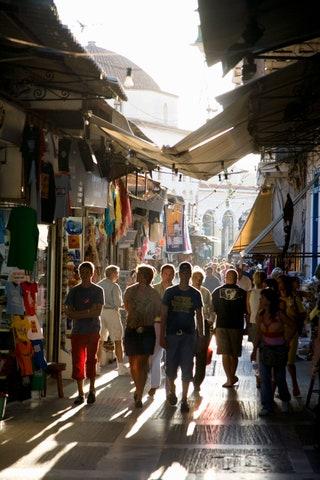
10. Explore the Wonders of the Historical Triangle through Shopping and Nightlife
The Historical Triangle of Athens is an enchanting labyrinth of timeless streets, stunning stoas, and bustling pedestrian alleys nestled among Syntagma, Omonia, and Monastiraki squares. Known as the heart of Athenian retail, this area boasts numerous specialist stores offering a myriad of products from eye-catching lighting to exquisite Greek fabrics. One of the highlights is the iconic Natural Greek Fabrics store, a fixture in Athens retail since 1936, known for its Mediterranean-striped bedlinen and beach towels. Step into the enchanting world of Ancient Greek Sandals, where footwear inspired by Greek mythology comes to life. In Karavan, bold hues meet feminine fashion while Parnès showcases meticulously handcrafted leather goods, canvas clutches, and unique patchwork vests. Once the sun sets, the Historical Triangle reveals a buzzing nightlife scene, serving as Athens' very own cocktail haven. Baba au Rum and The Clumsies, two remarkable bars positioned just blocks apart, are recognized globally for their exceptional offerings. There are also a variety of drinking spots cleverly positioned within the charming arcades or rooftops of the Triangle. Galaxy, located at Stadiou 10, is a beloved American bar capturing the heart of the Athens intelligentsia, while the hotel bars at Ergon House and The Zillers offer a different, yet no less appealing, atmosphere for night owls. With a mix of vintage vibes and luxury offerings, the Historic Triangle never fails to surprise and entertain locals and tourists alike.
11. Neoclassical iconography at the Loverdos Museum
The German architect Ernst Ziller was almost single-handedly responsible for the Neoclassical meets-Palladian-by-way-of-Byzantium look of Greece’s newly independent, late 19th century capital. Ziller designed hundreds of buildings, including a sumptuous mansion for his own large family. When Ziller hit hard times, Dionysios Loverdos, a banker and collector of icons, altarpieces, and post-Byzantine art, moved in and turned part of the house into a private museum. The building, which was later used as the dressing room for the National Opera nearby, was badly damaged by a fire in the 1980s. Spectacularly restored at last, the Loverdos Museum reopened in May 2021 as an outpost of the equally divine Byzantine and Christian Museum. The architecture — all stencilled ceilings, patterned floor tiles, murals and mosaic cupolas — almost outshines the mournful icons and ornately carved altarpieces.
12. Dine Amongst History
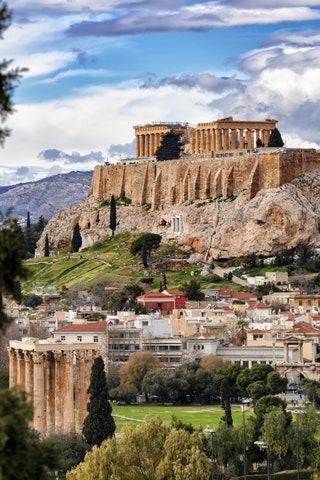
Experience the magnificence of the Parthenon from a rare viewpoint, minus the thrumming crowds. Embark on a tranquil journey around Acropolis via the serene pedestrian byway enveloping it, leading into the verdant expanse of Philopappou hill. This undisturbed retreat owes its artistic footpaths to the creativity of architect Dimitris Pikionis in the 1950s, who interweaved elements of Athens' past into the design using stones and marble remnants from neighboring structures. Commonly referred to as the Muses' Hill, this hushed sanctuary radiates the charm of the unexpected— a Byzantine chapel unveiled, an ancient excavation site discovered, and a 19th century observatory boasting a silver dome that holds an antiquated telescope for occasional stargazing nights.
Engulfed in the cool shadow of towering pine trees, uncover the Pnyx, the birthplace of world's first democracy. Here, spirited ancient Athenians once echoed their voices in fierce political discussions. Today, the grandeur of history and beauty of nature combine to make a splendid haven for a sunset picnic overlooking the enchanting Acropolis.
Enhance your sensory experience with the delicacies of local traders, like the rich olive bread and sweet pastries from Takis Bakery nestled at the incline's base, and complement it with bubbly drinks and a selection of cold cuts from the quaint Drupes Spritzeria just across. Dive deep into the textures, flavours, and rhythms of Athens in a setting very few can revel in.
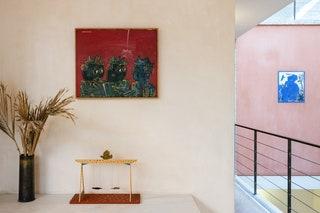
13. Enter the joyous universe of Alekos Fassianos
Dedicated to one of the most recognisable 20th-century Greek artists, and designed in collaboration with his great friend Kyriakos Krokos (the genius behind Thessaloniki’s Museum of Byzantine Culture), the Alekos Fassianos Museum was conceived in the ‘90s. But it didn’t open until 2023, the year after the artist’s death. “Fassianos was very modest; he didn’t want a monument in his name while he was alive,” says Katerina Mela, who guides visitors with a lightness of touch that befits the uplifting works. The modest house where Fassianos grew up has been completely reimagined in terrazzo, concrete, brick and stone. The subtle ochre and terracotta palette offsets the rich hues and graphic lines of the paintings. There are also illustrations, furniture, lamps, and a touching collection of letters and photographs that capture Fassianos’ playful spirit and artistic preoccupations: mythology, nature, and the human form. Superbly curated, with a few lovely souvenirs for sale, this is one of those rare museums where the works and the space are perfectly in sync.
14. Ramble around post-industrial Piraeus
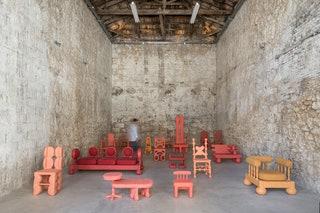
The port of Piraeus is slowly but surely shedding its reputation as nothing more than a grotty place to wait for a ferry. After the influx of influential galleries like Rodeo, The Intermission and Carwan (all handily located on the same street), the former Sans Rival ouzo factory has just been repurposed as an exhibition and studio space. The incredible inaugural show, curated by Stamatia Dimitrakopoulos, suggests great things to come from this brutalist behemoth. There are plenty of old-time pleasures in this working-class neighbourhood, too: from the covered food market behind the harbour to the well-priced fish tavernas that line the waterfront Piraiki, the overlooked Archaeological Museum, the city-and-seascape from Kastella Hill, and the coastal park created around a derelict fertiliser factory at Lipasmata, where you can watch ships come and go as the sun sets.
15. Source the best gifts where you’d least expect them
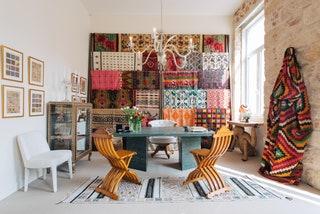
Two of the city’s chicest shops have appeared in unlikely settings: hidden down a Plaka back alley, Mouki Mou Athens is a world apart from its Marylebone sister store. The spare showroom is more like a gallery, where you can touch and try on beautifully made clothes, jewellery, shoes and hats (there’s homeware, too.) Don’t miss the glorious roof garden almost kissing the Parthenon, a meeting place for makers, designers, and interesting characters. Occupying the first floor of a neoclassical townhouse on grungy Vathis Square, Anthologist brings a welcome hit of colour and soul to a downtown area on the cusp of reinvention. From antique textiles to Egyptian kaftans, Mexican baskets, vintage kimonos, as well as ceramics, jewellery, and brass objects crafted by local artisans, Andria Mitsakos has curated a “shoppable museum” for itinerant collectors.
16. Dive into the past… before it disappears
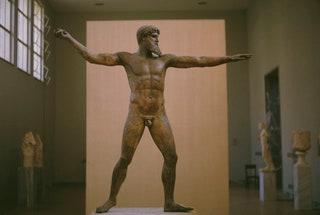
Designed to cement the status of the modern Greek capital after the War of Independence, the National Archaeological Museum contains one of the world’s great collections of ancient and prehistoric art — but less than 10% of the artefacts are on display. That’s set to change when the museum gets a radical makeover by this year’s Pritzker winner, Sir David Chipperfield. He will expand and update the 19th-century museum to make it more accessible and sustainable. The proposed design will create two levels of subterranean galleries with glass facades, rammed-earth walls, and extensive street-level gardens. It’s sure to rival, if not outshine, Bernard Tschumi’s blockbuster Acropolis Museum, and give a lift to the underrated Patissia neighbourhood.